



Subject Object Pauses U.S. Shipping After Illegal Tariffs Applied to CUSMA-Compliant Goods
Calgary-based jewellery studio Subject Object has paused shipping to the United States after a recent shipment incurred a $150 CAD tariff on a single, hand-made piece. While the item was ultimately delivered, the charge prompted the brand to reassess the reliability and viability of cross-border distribution under current conditions.
Notably, the pieces in question are technically eligible to be sold in the U.S. under CUSMA, the trade agreement intended to reduce or eliminate tariffs on qualifying goods between Canada, the United States and Mexico. In practice, however, Subject Object found that eligibility did not guarantee consistent or predictable treatment at the border, creating uncertainty around fees that are difficult for a small brand to forecast and absorb or pass on to customers.
“This nebulous system is quietly normalizing the shift of responsibility onto small businesses. You can meet every requirement under CUSMA and still be charged at the discretion of U.S. customs, with no transparency or recourse. This structural ambiguity leaves independent makers absorbing costs that were never legally owed in the first place,” says Bramble Lee Pryde, interdisciplinary artist and founder of Subject Object.
Subject Object produces small-batch, hand-crafted jewellery, often made one piece at a time — products that are intended to qualify for tariff-free entry under CUSMA. When those goods are nevertheless charged duties at the border, the cost doesn’t disappear; it lands either on the customer at checkout or on the brand if it chooses to absorb the fee. According to the studio, these charges are being applied in a way that runs counter to the trade agreement itself, effectively transferring unlawful costs onto consumers or small businesses. For independent brands without scale or outside investment, that kind of surprise taxation — levied on goods that should be exempt — creates not just margin pressure, but a fundamental breakdown in trust between trade policy and the people it is meant to serve.
Rather than continue shipping while absorbing or quietly passing along those costs, Subject Object elected to stop U.S. distribution and refocus on its Canadian and European customer base. The move reflects a broader recalibration among independent designer brands, many of which are re-evaluating international expansion in favour of more controlled, financially sustainable growth models.
THE EXISTENTIAL DREADLINGS
The pause also coincides with the ongoing launch of Subject Object’s latest collection, The Existential Dreadlings — a sculptural fine jewellery collection and body of work shaped by themes of uncertainty, anxiety and self-examination. The collection translates personal and collective anxiety into hand-crafted form.
Originally developed as a series of sculptures responding to grief and uncertainty, the pieces were later adapted into wearable objects intended to act as talismanic anchors. Made entirely in Canada from hand-carved sterling silver and 14k gold, the collection reflects the studio’s commitment to small-batch, high-craft production — the very model now under strain as cross-border trade mechanisms apply unpredictable costs to goods that are intended to move freely under CUSMA.
The timing of this is not lost. As the collection interrogates systems of meaning, control and inner unease, its distribution has been directly affected by the very unpredictability it reflects.
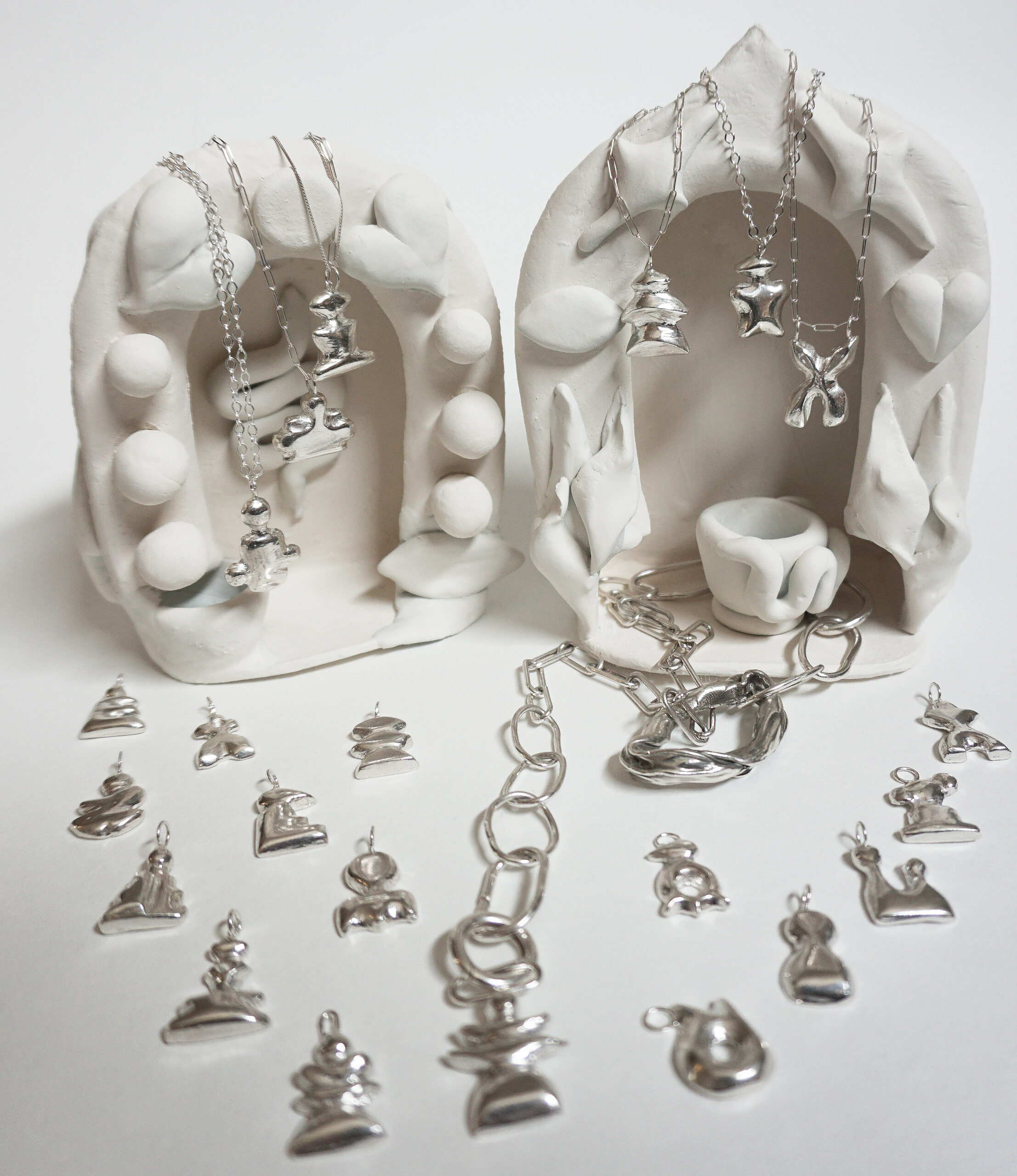
While U.S. shipping is halted for the foreseeable future, The Existential Dreadlings collection underscores Subject Object’s continued commitment to concept-driven work and deliberate growth, even as the mechanics of global trade introduce instability into what should, by design, be a frictionless exchange.
As trade policies continue to shift, Subject Object’s decision highlights a growing tension in the fashion and accessories sector. Global reach remains desirable, but for many independent brands, it is no longer operationally neutral — even when trade agreements suggest it should be.
Want more dread? Read Totalitarian Architecture: Designing Fascism, published during Trump’s first stint as President.


